
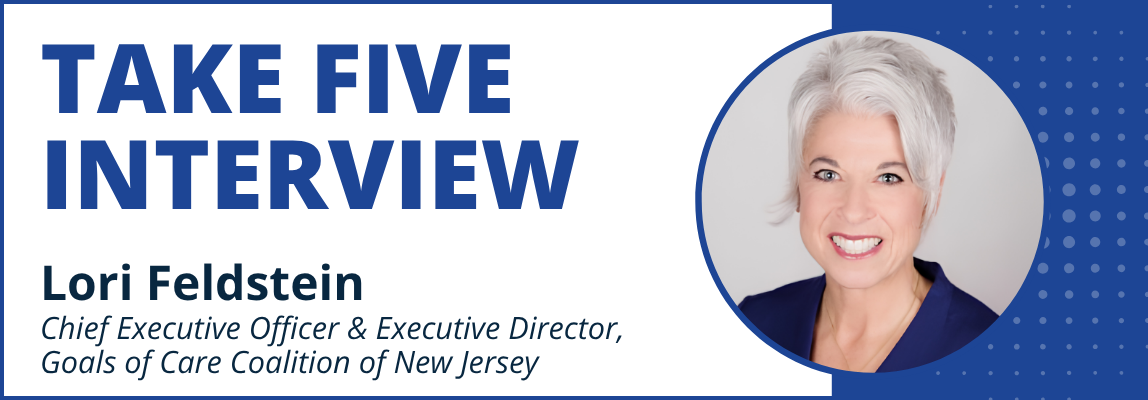
Lori Feldstein, Chief Executive Officer and Executive Director of the Goals of Care Coalition of New Jersey (GOCCNJ), a member of the Quality Institute’s Consumer Council.
New Jersey’s new Medicaid Community-Based Palliative Care benefit officially launched on April 1. Can you explain what this benefit is, who it is designed to support, and why this moment is so important for patients and families across the state?
This is a major step forward for people living with serious illness and their caregivers. New Jersey is the third state after California and Hawaii to offer a Medicaid benefit for community-based palliative care, and there are dozens of other states behind us that are looking to do the same. The benefit is designed to support Medicaid members and dual eligibles who have a serious illness and are experiencing declines in quality of life as a result, due to symptoms, stress, frequent hospitalizations, or overall health.
What makes this benefit different is that it brings an interdisciplinary team and more person-centered support to patients and caregivers in their homes and communities, hopefully much earlier in the course of illness.
Patients who qualify can access pain and symptom management, care coordination, emotional and spiritual support, advance care planning, and help navigating the health care system through a team that may include physicians, nurses, social workers, chaplains, and other specialists.
How does access to community-based palliative care connect with broader Age-Friendly Health System efforts and the goals of the Master Plan for Aging in New Jersey?
I think that connection is incredibly strong. It’s our belief that you can’t really build a truly age-friendly health care system without effectively supporting older adults living with serious illness. Community-based palliative care shares many of the same goals, helping people remain at home, supporting caregivers, improving care coordination, reducing unnecessary hospitalizations, and ensuring care aligns with patients’ goals and values. One of the cornerstones of palliative care is ensuring that patients have an opportunity to talk about what matters most to them, and for their providers to align their care with what matters to them– and that’s one of the core principles in the age-friendly health system. Palliative care also addresses the other aspects of age-friendly care, like mobility, medication management, emotional and spiritual support, to really help alleviate a lot of the burden that comes along with complex chronic serious illness.
GOCCNJ’s Equity in Serious Illness Program is training Ambassadors across the state to engage communities directly. What have you learned so far about how people understand palliative care, and where do you still see the biggest misconceptions or barriers?
Unfortunately, the biggest thing we’ve learned is that awareness of palliative care remains extremely low, and confusion about what it is remains extremely high. That is true not only for the general public and patients and caregivers, but also for some health care providers, who still mistakenly believe that palliative care is the same as hospice or that it is only for end-of-life care. That’s probably one of the biggest barriers or misconceptions we’re dealing with.
We’ve also learned that we really need to make sure people understand that palliative care is often about living for many, many years with serious illness, and that palliative care can help those patients have more good days at home and continue on with their treatment, and get back to living well.
But not only does that message matter, but the messenger matters too. Through research we’ve done over the last couple of years we’ve learned people are much more willing to engage with information about palliative care when it comes from somebody they trust, somebody familiar with their community, or when they’re hearing the information in a safe space. If it comes from somebody who speaks their language, who understands their culture and is delivered in a place that they know, then they tend to hear something different than they might hear if they’re getting the information in a clinical setting during a crisis.
Much of the conversation around palliative care focuses on older adults, but there is also growing discussion about how these services can support children and families. What opportunities do you see for pediatric populations under this new benefit?
This is a very important opportunity because serious illness doesn’t just impact the patient. In a pediatric situation, the entire family, including siblings and parents, are affected.
This benefit creates an opportunity to expand access to an interdisciplinary support team for children living with serious illness and their families. It’s not just about symptom and pain management for the patient. There’s a whole component of the benefit that delivers care coordination, psychosocial support, spiritual support, caregiver support, and help navigating the health care system that has a tremendous opportunity to reduce suffering and support families early in the disease process.
There’s still a lot of work to do because there are few pediatric palliative care providers in the state, but our hope is that bringing this benefit to the pediatric population will help develop workforce capacity, raise awareness, and increase pediatric provider engagement.
As providers complete enrollment and credentialing over the coming months, what should health care organizations, community groups, and advocates be doing now to help ensure New Jersey residents with Medicaid are aware of and able to access these services?
Health care organizations should educate clinicians about community-based palliative care and who could benefit from it and encourage earlier referrals. Through programs like our Champion Program, we’re doing peer-to-peer education in the oncology, geriatrics, and primary care communities to ensure they understand palliative care and know how to introduce it to patients and caregivers.
Community organizations and advocates are working now to help normalize conversations about serious illness support, clarify misconceptions about palliative and hospice care, reduce stigma and confusion, and connect people with trusted resources before they experience a health care crisis.
We say all the time: just because we built it doesn’t mean they’ll come. Policy alone doesn’t create access. It’s on all of us—through community engagement, clinician training, and workforce education—to help people understand the benefit and ultimately deliver on its promise to support patients, families, and caregivers in living well with serious illness.
For more information about the new Medicaid benefit for community-based palliative care, visit goalsofcare.org
To access a directory of providers who deliver palliative care in the community, visit GOCCNJ Palliative Care Provider Directory | Goals of Care Coalition of New Jersey.