
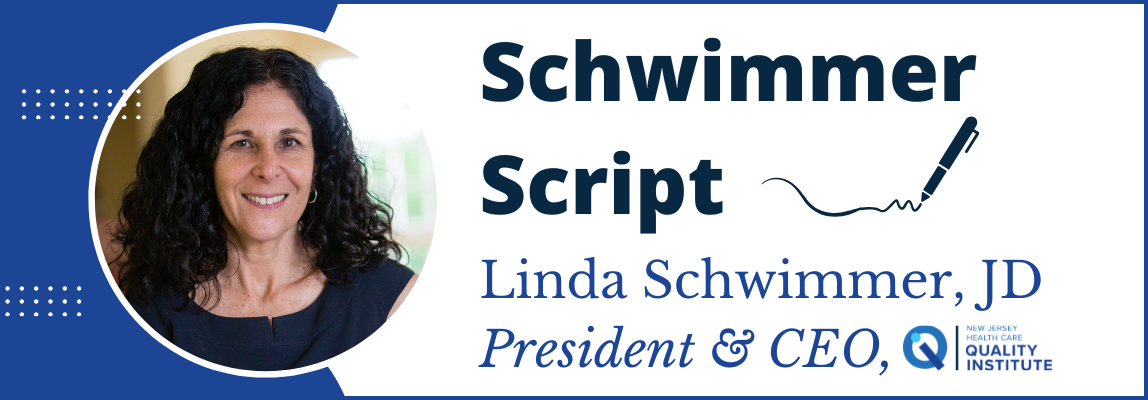
As Governor-elect Mikie Sherrill gets ready to take office in January, she faces stiff headwinds on health care. I share these thoughts to support her success, which is critical for all New Jerseyans:
First, you must strengthen the state’s core operations because these operations are the key to solving the foreseeable — and unforeseeable — challenges ahead. An immediate crisis is the federal changes to Medicaid — like we’ve never seen —that will jeopardize health care for many of the over 1.8 million residents currently enrolled. And there is a federal assault on public health and prevention, reproductive health, and medical research, all challenges that require a robust and coordinated “all of government” public health response. On top of these looming crises are lingering New Jersey health care issues — the cans that have been kicked down the road and now sit squarely at the front door of the State House.
As governor, you can be the chief executive to finally tackle the lingering, neglected issues that have long prevented state government from functioning efficiently and effectively. Your top priority should be to assess the needs of relevant agencies — Treasury’s Division of Pension and Benefits; Health; Banking and Insurance; Children and Families; and Human Services — to determine whether these essential agencies possess the talent and technology needed to carry out their missions.
These agencies shoulder enormous responsibilities, and, when they function at their best, can instill public confidence in good government. They have critical roles in keeping health care in New Jersey safe and of high quality. These departments are responsible for everything from licensing providers and facilities, ensuring access in insurer networks, investigating medical mistakes, preventing waste and fraud, and making sure that billions of taxpayer-funded health care is provided efficiently, effectively — and as contracted. Yet these departments have been hollowed out as their missions have expanded, leaving them hamstrung and unable to fulfill those statutory missions.
Behind the scenes, our members, who come from all aspects of health care in New Jersey, regularly experience the repercussions of the state agency challenges. For example, imagine you are a physician trying to care for a family unable to reenroll in Medicaid during a busy redetermination period. The outdated eligibility and enrollment systems cannot keep pace with the volume and complexity of today’s program. At the same time, managed care networks may go years without a true audit, leaving families unsure whether the “in-network” providers listed are actually in network or taking new patients. There are not enough staff to manage a program that now serves more than 1.8 million residents and commands over $24 billion in FY2026.
Consider the Division of Pensions and Benefits, charged with purchasing health coverage for more than 757,000 employees and retirees. It is one of the nation’s largest public health benefits purchasers, yet it operates with skeletal staffing levels compared to other states of similar size. With over $7 billion in annual spending, the gap between responsibility and capacity is stark. Or take a health system expanding its maternal infant health services. Even after investing in facility upgrades and staff training, it may wait more than a year for approvals from the Department of Health and the facility may have to transfer patients out of state. These delays stem from inspection and licensing teams that do not have the workforce needed to keep up with the demand.
Meanwhile, at the Department of Banking and Insurance, a thin regulatory team must oversee all licensed health insurers in multiple markets. Without enough technical staff, required activities such as conducting market conduct examinations, enforcing network adequacy standards, or implementing needed insurance reform laws, such as those affecting the small employer market or parts of the Out-of-Network Law, fall to the wayside.
Thus, we respectfully suggest as you transition into office, choose leadership, and draft your first budget, that you ask the leaders of your agencies if they have the staff, resources and technologies they need. New Jersey has strong policy goals and ambitious health system priorities, but today, the truth is, the state’s agencies are not resourced at a level that matches the scale, complexity, and stakes of their work. We must ensure that these agencies have the staffing and technology capabilities to carry out their enormous responsibilities.
The Quality Institute and our members wish you and your team all the best and look forward to working with you to strengthen the state’s ability to advance the health and wellness of everyone in New Jersey.